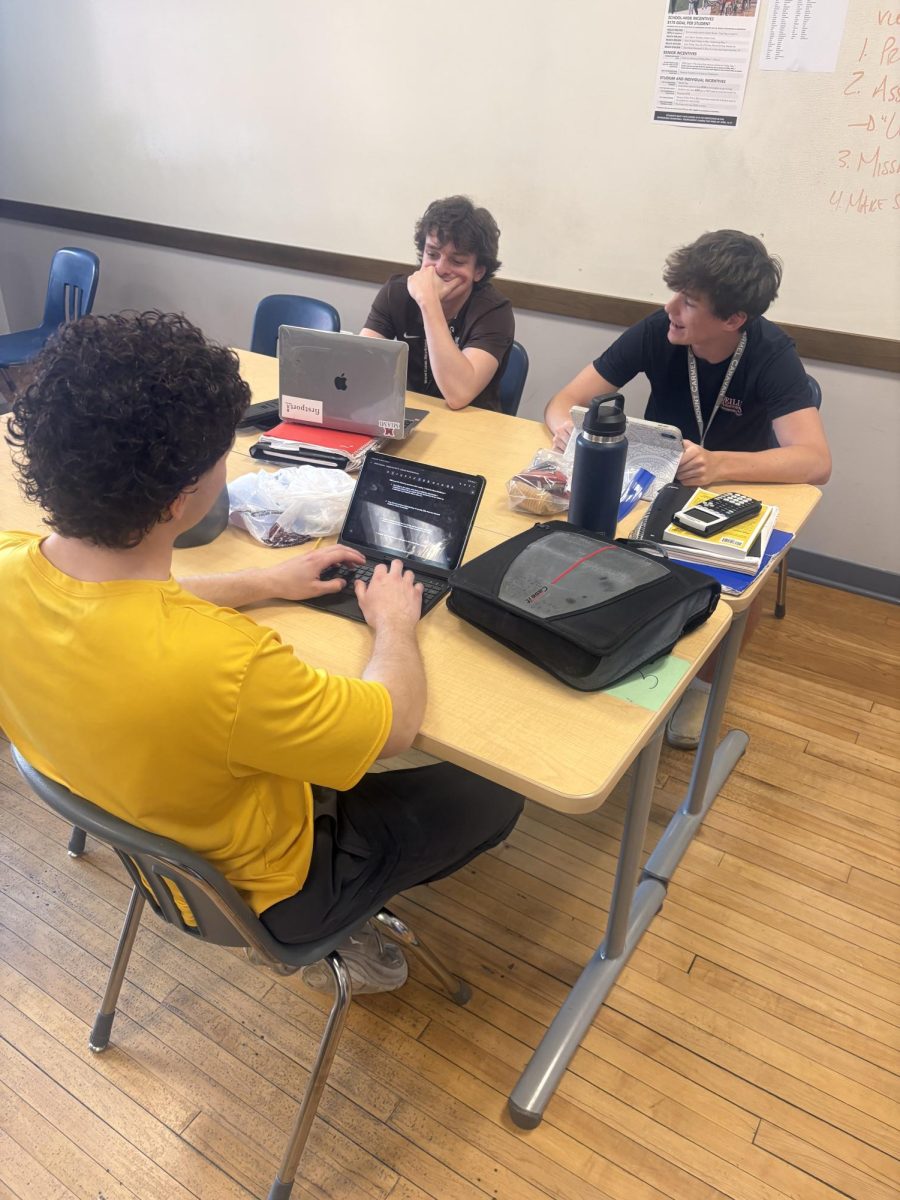


Students can choose either easier subjects or more complicated ones. Even though it may be appealing to go for the easy way out, a lot of teachers and students believe that the latter choice helps students acquire valuable skills that are useful long after graduation.
Sometimes it is not that simple to decide which subjects to take, and sometimes an individual might put an excessive amount of pressure on themselves because they sign up for too many advanced classes. As a result, it is essential to understand the actual implications of advanced lessons to help with making an educated decision about your education.
One of the most obvious consequences of advanced classes is the increased necessity to learn time-management skills. Students who take these classes are aware that homework and studying require constant attention throughout the week. Lesson structure requires students to be able to look at the schedule and plan around it.
“The most challenging part about taking AP and Honors is the course load,” says junior Derrick Rucker.
Work becomes one of the first major adjustments students experience. It shows how quickly expectations rise when moving into advanced classes. Because of this pressure, students begin developing better habits over time. They start organizing their days around homework, studying, and breaks rather than doing work randomly or at the last minute.
“I have more of a time management,” says senior Joseph Walsh. “I have a plan around what time I’m going to do homework, what time I’m going to take a break.”
Students gradually build structure in their routines. These skills are not just academic but also useful for future responsibilities like jobs and college life.
Teachers also reinforce that success in these classes depends heavily on consistent daily effort rather than cramming before tests. Students who fall behind usually struggle to recover due to the fast pace of the course.
“My best students are those who have that work ethic who do homework daily,” says math teacher Mrs. Jennifer Smola, who has Honors and AP classes.
This highlights how discipline is not optional in advanced classes. It becomes a requirement for long-term success.
In addition to that, another advantage is that AP and honors classes help students prepare well for college studies. This is evident from the speed, workload, and critical thinking skills involved.
These students enroll in these classes since they are linked to their academic future. Many recognize that being exposed to more difficult material early can help them later in college.
“It’s getting me more prepared, especially for the field I’m going into, nursing,” says Walsh.
This shows how students connect current efforts to future careers. It reflects how advanced classes serve as early preparation for specific goals. Teachers explain that AP courses move at a much faster pace than regular classes, requiring students to process and understand material more quickly.
“AP is a different curriculum,” says Mrs. Smola. “You have to move a lot faster.”
Students need to be able to keep up with the speed. It prepares them for how much work is in college. In an AP class, there is more thinking and memorization.
“The AP questions are college-based, and college-based questions are expected to go into detail,” says Mrs. Smola. Students are pushed to go beyond surface-level understanding. It mirrors the type of thinking required in college. Teachers believe this experience helps reduce the adjustment that students face when entering higher education.
“This demonstrated level of rigor, sacrifice, and effort will allow you to succeed in college,” says Mrs. Smola.
Higher-level classes help students in the future with college because it gets them prepared early on.
“I don’t regret taking harder classes,” says Junior Derrick Rucker.
Students begin to view academic difficulty as something productive rather than negative. The teacher emphasizes that growth happens when students are pushed beyond what feels comfortable. Without challenge, improvement is limited.
“It pushes [students] to go further,” says chemistry teacher Mrs. Emma Norise. Academic pressure leads to personal development and stronger thinking skills.
“Just don’t be afraid to challenge yourself,” says Mrs. Smola. “It’s scary because you may not succeed every time, but that’s the only way you’re going to learn.”
Failure is part of progress, not something to avoid. Students also begin to understand that the effort they put in now will benefit them far beyond high school.
“Finding one class that will challenge you, whether that’s math, science, English, or history, those are your cores,” says Mrs. Smola. Her advice reflects the importance of balance when selecting advanced courses. Students who take on too much at once can struggle to keep up with the workload and expectations.
“You’ll go a long way in life with the knowledge you’ll gain from these classes,” says Walsh.
Advanced placement and honors classes are perceived as a source of stress, but they are crucial in laying down the groundwork for success. Higher-level classes promote discipline and improve a student’s capacity for time management and skills necessary for further education.
As students have to watch out not to put too much pressure on themselves, a few advanced courses may still offer great benefits in the long run.